
ride or die : ink after death
For as long as tattoos have marked the living, someone has wondered what becomes of them once they pass on. The answer, a quiet niche industry addition, now is increasingly considered more and more by clients who see their skin as meaningful masterpieces.
A CENTURY LONG CONTINUITY
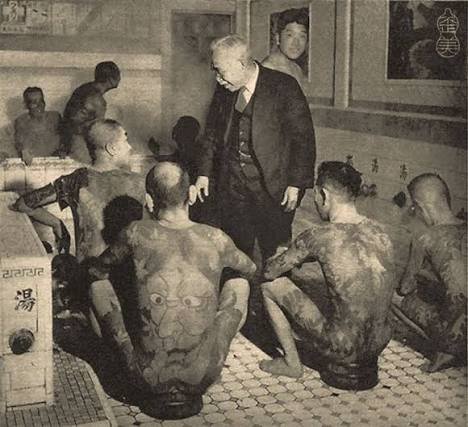
In the early 1900s, Japanese doctor Fukushi Masaichi was studying syphilitic skin lesions when he noticed tattooed areas appeared less affected than the surrounding skin. That observation became a lifelong obsession: he preserved tattooed skin from corpses, collecting roughly 2,000 samples by World War II. His son continued the collection at Tokyo University's Medical Pathology Museum.
(For more on how tattoos have been used medicinally across history and why modern science abandoned that research, read our previous article: Ink and Immunity.)
This wasn't new territory. The Wellcome Collection in London holds over 300 preserved tattooed skin fragments from 1850–1920, with sister collections in Paris, Kraków, and Lisbon — archives from an era when preserved skin was institutional property, often collected without consent. What's changed isn't the impulse to preserve; it's who gets to decide.
THE MODERN INDUSTRY
Today, two organizations lead the commercialized version. Save My Ink Forever, founded by father-and-son embalmers Michael and Kyle Sherwood, excises the dermis before preserving and mounting it beneath museum-grade UV glass, with small projects starting around $1,000. NAPSA lets tattooed people designate specific pieces for loved ones, much like a ring or family heirloom. The techniques descend from Fukushi's methods, now client-directed and performed with consent.
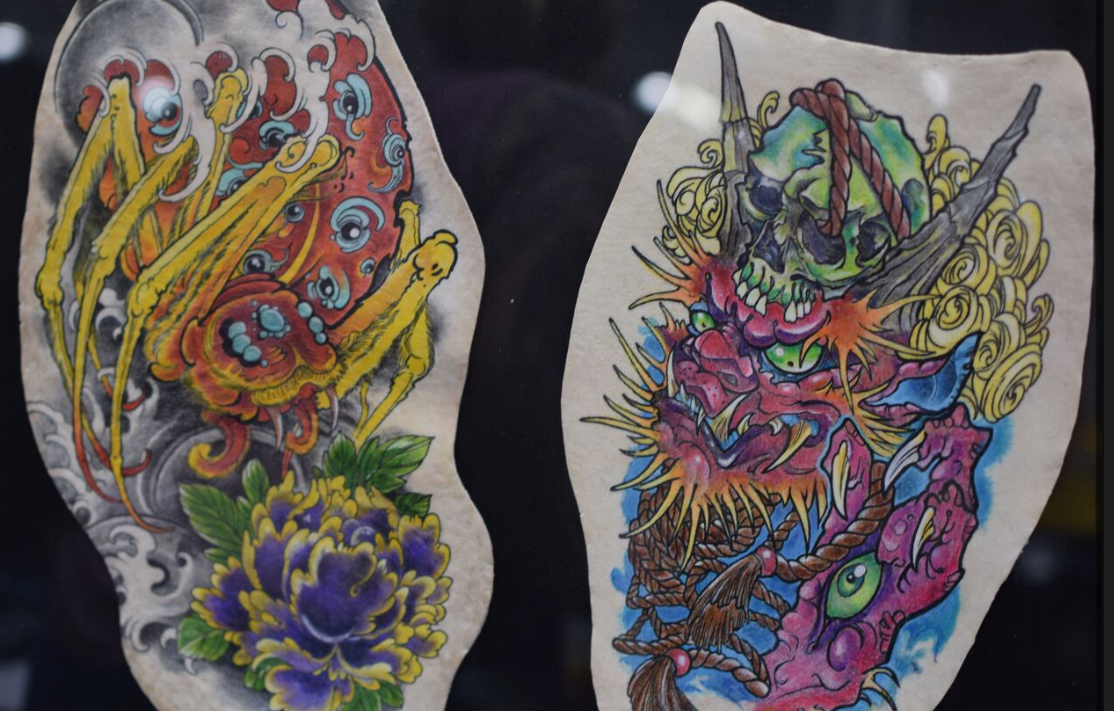
Preserved skin from Chris Wenzel
THE TWIST : WHEN PRESERVATION MEETS ESTATE LAW
Chris Wenzel, a Saskatoon tattoo artist and owner of Electric Underground Tattoos, requested before his death that nearly 70% of his tattooed skin be preserved for his children and grandchildren — a roughly $80,000 project, one of the largest ever undertaken. But that number is only removal and labor, not an appraisal. Just as restoring a painting isn't the same as appraising it, preserving skin measures labor — not the decades of touch-ups, artist reputation, and personal meaning layered into the work.
After his shop closed under financial strain, the building's management took possession of everything inside, including his preserved skin — treated as property with no documented value beyond what it cost to preserve. The family launched a public fundraiser to recover it, and it's since been rumored within the tattoo community that the matter was resolved — but no public reporting confirms that, and the outcome remains unconfirmed.
That's the gap: preservation exists. Valuation doesn't.
THE LEGAL LOOPHOLE: WHY TRANSFORMATION CHANGES EVERYTHING
Once remains are transformed into something with separate value — framed skin, cremation diamonds, a memorial tree — they stop being legally protected as human remains and start being treated as property. A buried body is generally protected; most states, including Nevada, prohibit seizing remains to satisfy debt. But invest in transformation, and that protection disappears. The IRS can even seize and auction "flowers, plants, and shrubs" from an indebted estate — meaning a memorial tree, however meaningful, is still just a tree. The paradox: the more you invest in preserving remains, the more vulnerable they become. Plain burial stays protected. Saying "I want my skin preserved for my grandchildren" turns remains into property.
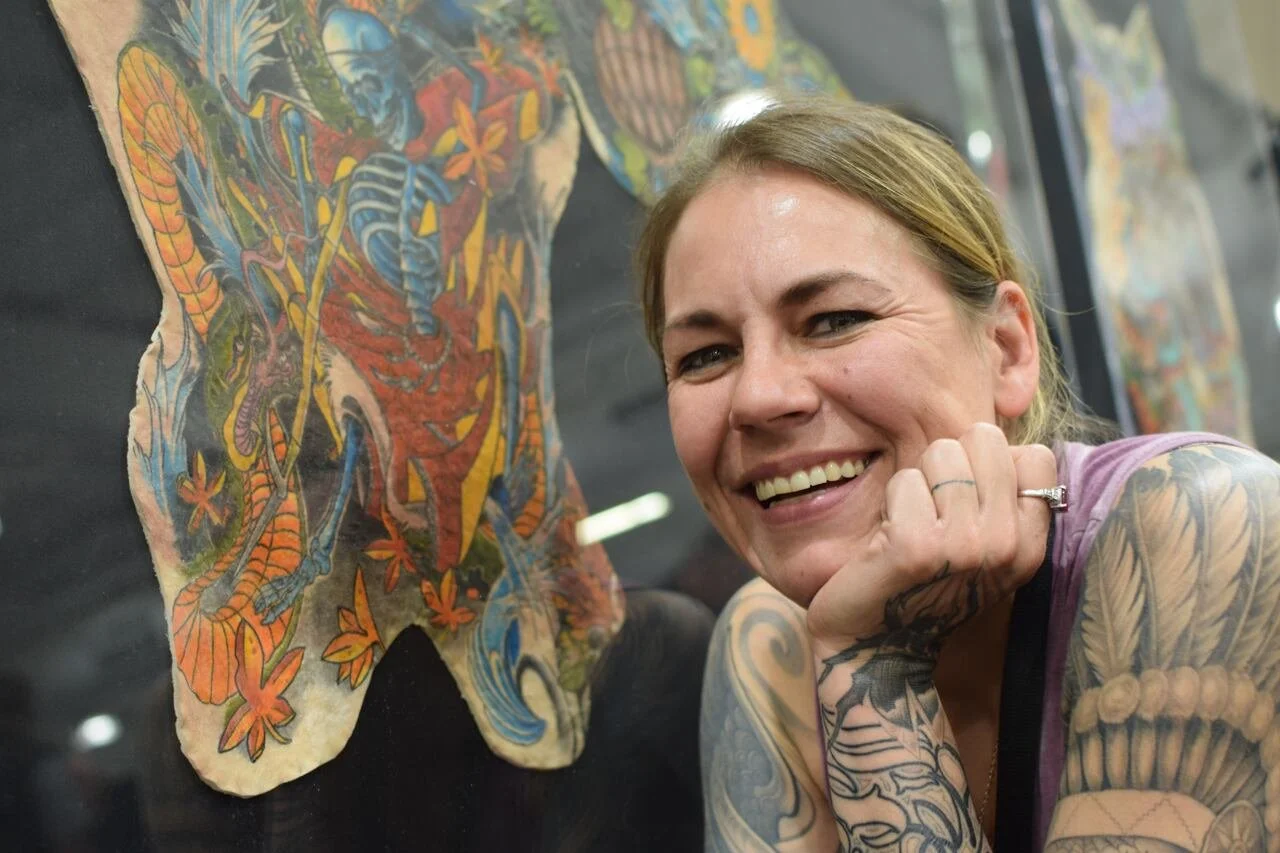
Wenzel’s wife , who personally made sure she was there to oversee the process, and until she was interrupted by this situation, was showing Chris’ masterpieces in a tour of the industry.
THE ONLY REAL PROTECTION: IRREVOCABLE TRUSTS
Wills, beneficiary designations, and revocable trusts can all be challenged in court if an estate owes money — those assets are still legally yours, still part of your estate. An irrevocable trust works differently: you give up ownership, so the assets are no longer legally yours or part of your estate — untouchable by creditors or landlords. Had Wenzel's skin been placed in one, naming his children as beneficiaries, the landlord would have had no legal claim to it.
THE DEEPER QUESTION
Estate planning is something most people put off, and that avoidance is what creates situations like Wenzel's. It's not just tattoos — Medicaid's estate recovery program lets states reclaim long-term care costs by placing a claim against the home after death, often catching families off guard.
Your skin is an undocumented asset in the same way. If you've invested in meaningful work by respected artists, if those tattoos carry cultural weight or a story that compounds over decades, that value deserves documenting while you're alive — not decided by someone else later. Talk to your artists about what you've built together, and to an estate attorney about whether an irrevocable trust makes sense.
Artists have a role too. Certifying and logging authentic pieces — who made it, when, on whom — builds provenance the way any collectible does. If tattoo valuation ever catches up to preservation, that documentation could be the difference between a tattoo being worth its removal cost and being worth what it actually represents.
The strange part isn't that skin can be seized, it's that burying it would have kept it SAFE.
