
Your “New” INK Is Older Than You Think
Every few years, tattooing experiences a revival. Styles once considered outdated resurface, often marketed as something new. But tattooing rarely abandons its past — like many art mediums it evolves by reworking older ideas into new forms.
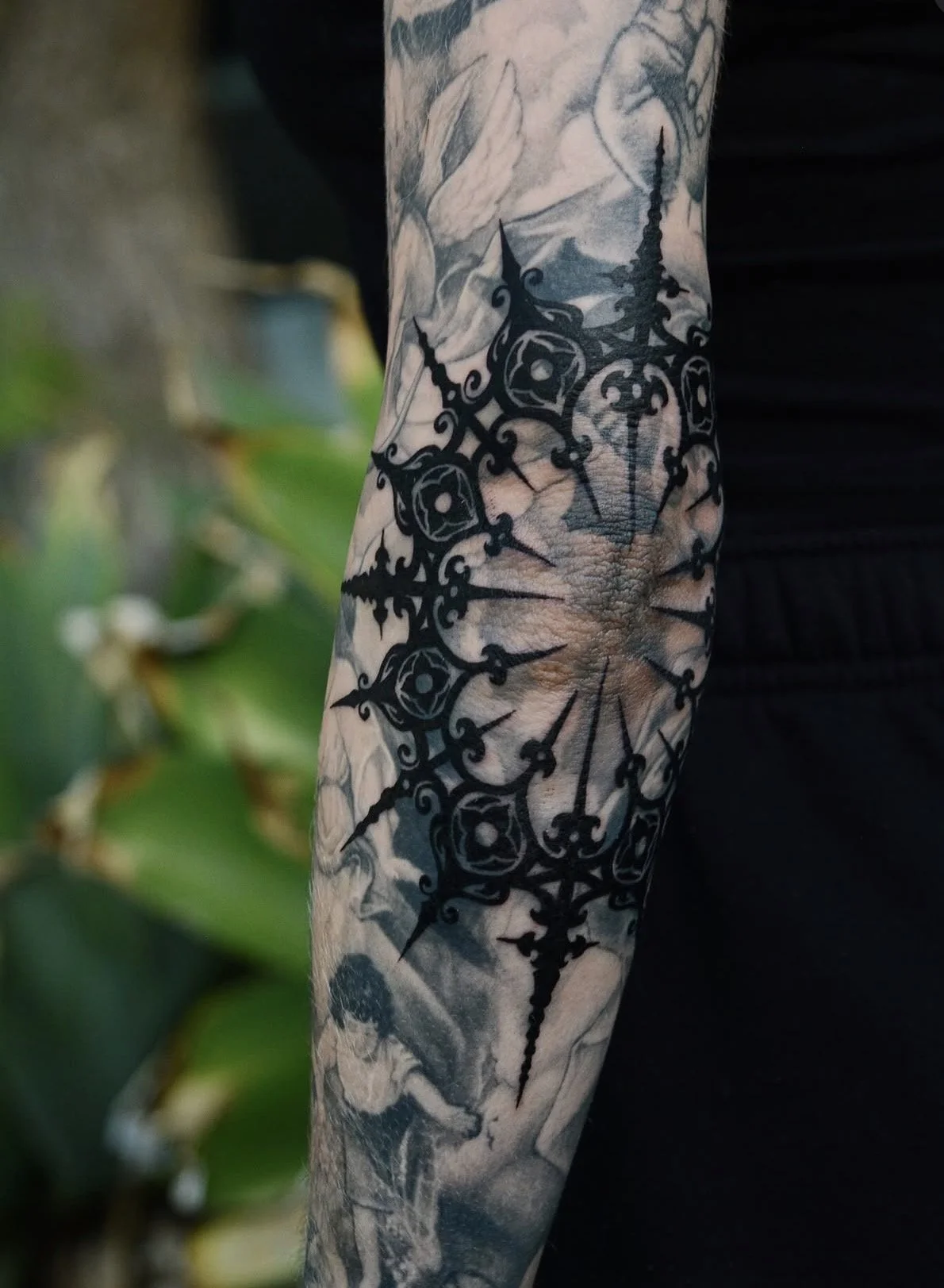
The current popularity of neo-tribal, cybersigilism, ornamental blackwork, blackout tattoos, blast-over coverups, and pepper shading reflects this pattern. Though these styles look contemporary, they rest on the same enduring principles: body flow, contrast, composition, readability, and visual impact. Each one takes an older visual language and adapts it to modern tastes, tools, and cultural references.
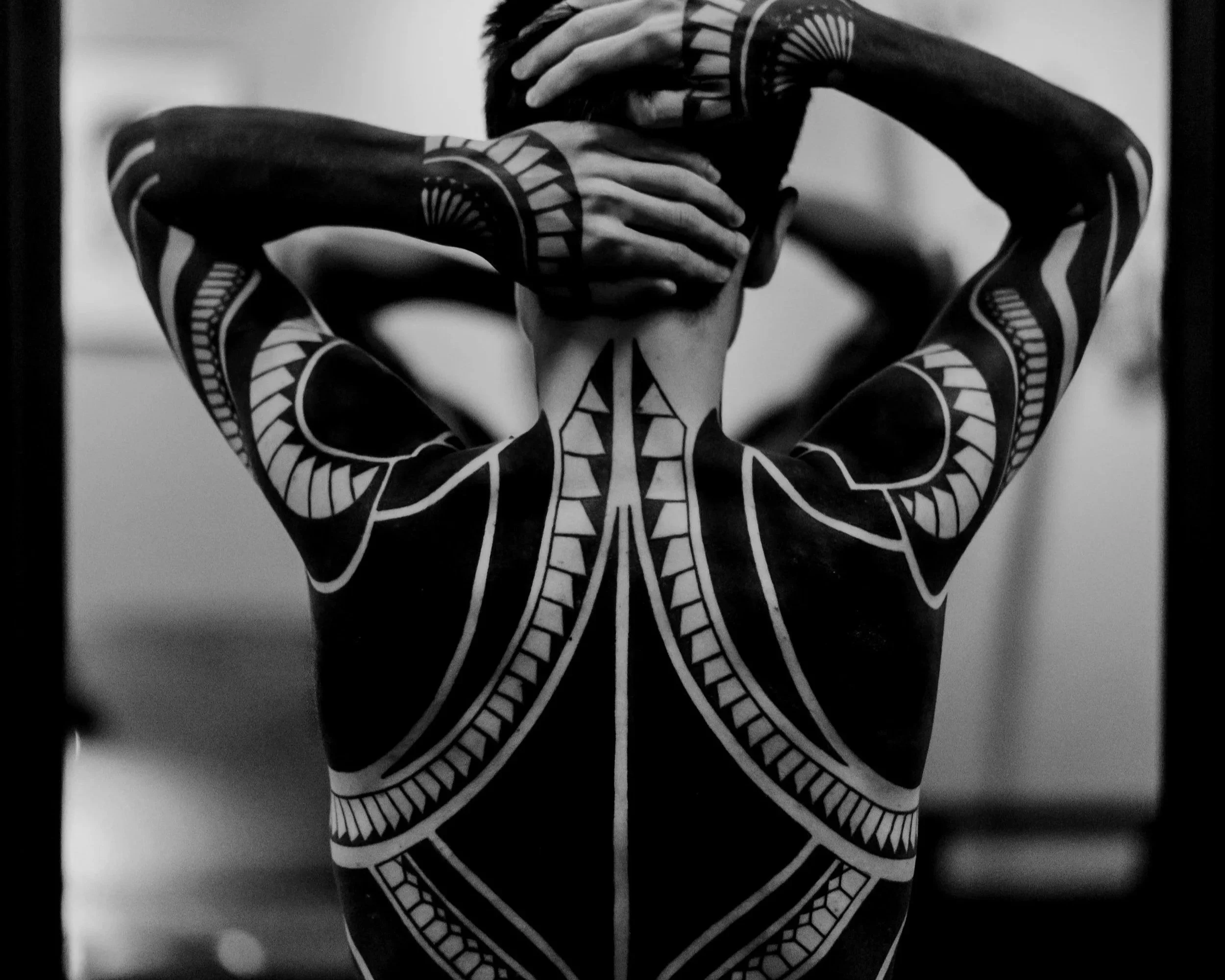
The Root: Tribal Tattooing
At the center of this history is tribal tattooing. Long before tattooing became a modern profession, traditions flourished across Polynesia, Southeast Asia, Africa, and the Americas. These marks signified identity, spirituality, ancestry, social status, and personal achievement — cultural markers, not simple decoration. In Polynesia especially, tattooing was, and remains, a cornerstone of society. The English word itself descends from the Tahitian and Samoan tatau.
These traditions established visual foundations that still shape tattooing today: bold black forms, negative space, designs that follow the body's contours, and large-scale composition. Modern styles build on these same ideas, even when the results look nothing alike.
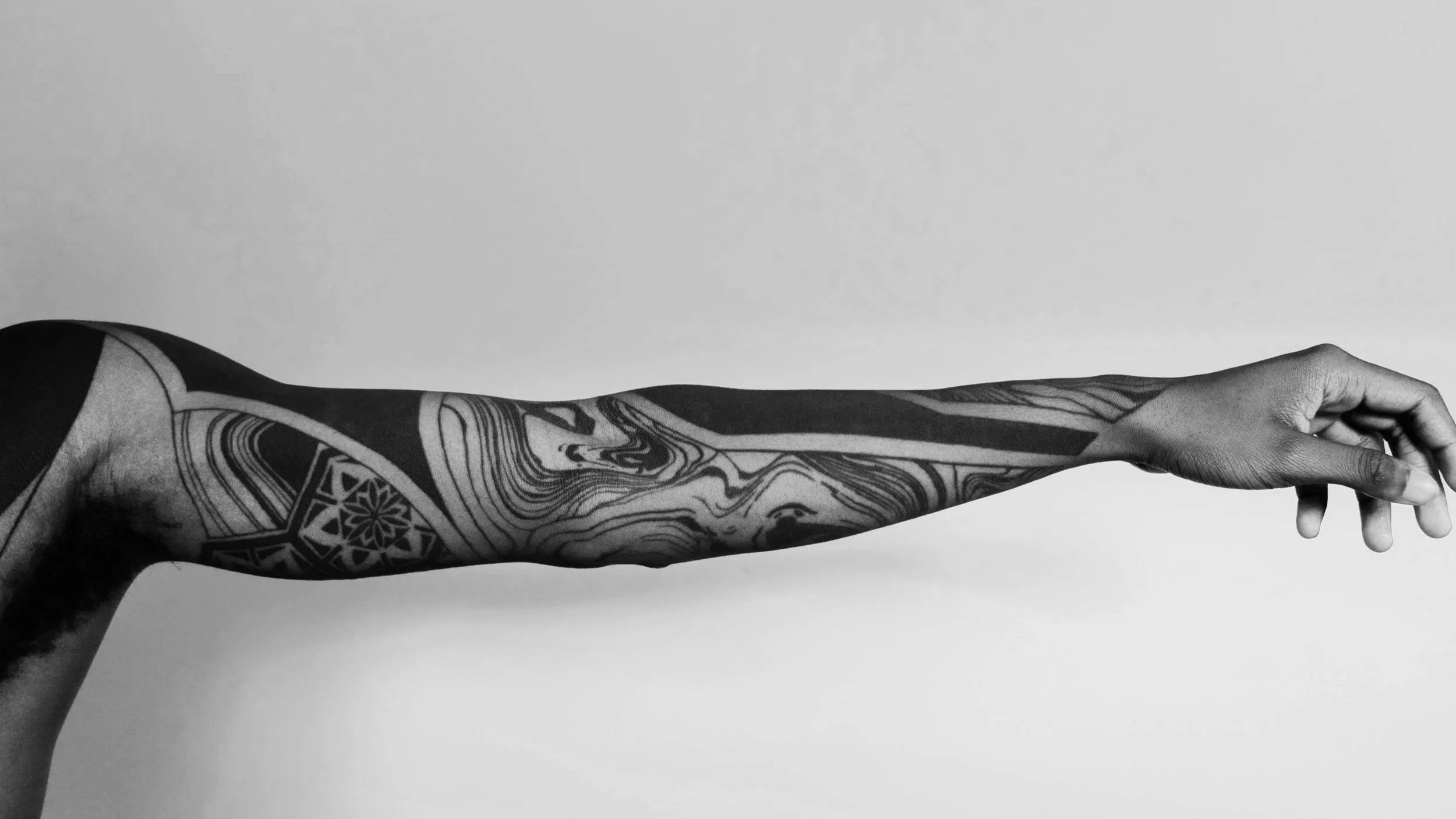
How the Past Resurfaced
Neo-tribal reinterprets tribal principles through abstract shapes, sharp curves, and heavy blackwork, emphasizing movement across the body over literal imagery.
Cybersigilism applies that same visual logic to futuristic symbols and spiked, Y2K-inspired forms — tattoos that feel digital, aggressive, and highly stylized.
Ornamental blackwork blends geometric pattern with decorative motifs, drawing on sacred geometry, architecture, and lace-like design for balanced, body-conscious pieces.
Blackout tattooing pushes older ideas of saturation and contrast to their extreme, using large fields of solid black — sometimes for full coverage, sometimes as a dramatic frame built from negative space.
Blast-over coverups show tattooing's instinct to build on existing work rather than erase it. Rather than hiding an old piece, the new design layers over it, using scale and contrast to fold the original into something new.
Pepper shading uses thousands of fine dots to create a peppery, granular gradient and texture — a black-and-grey effect that reads as both delicate and precise.
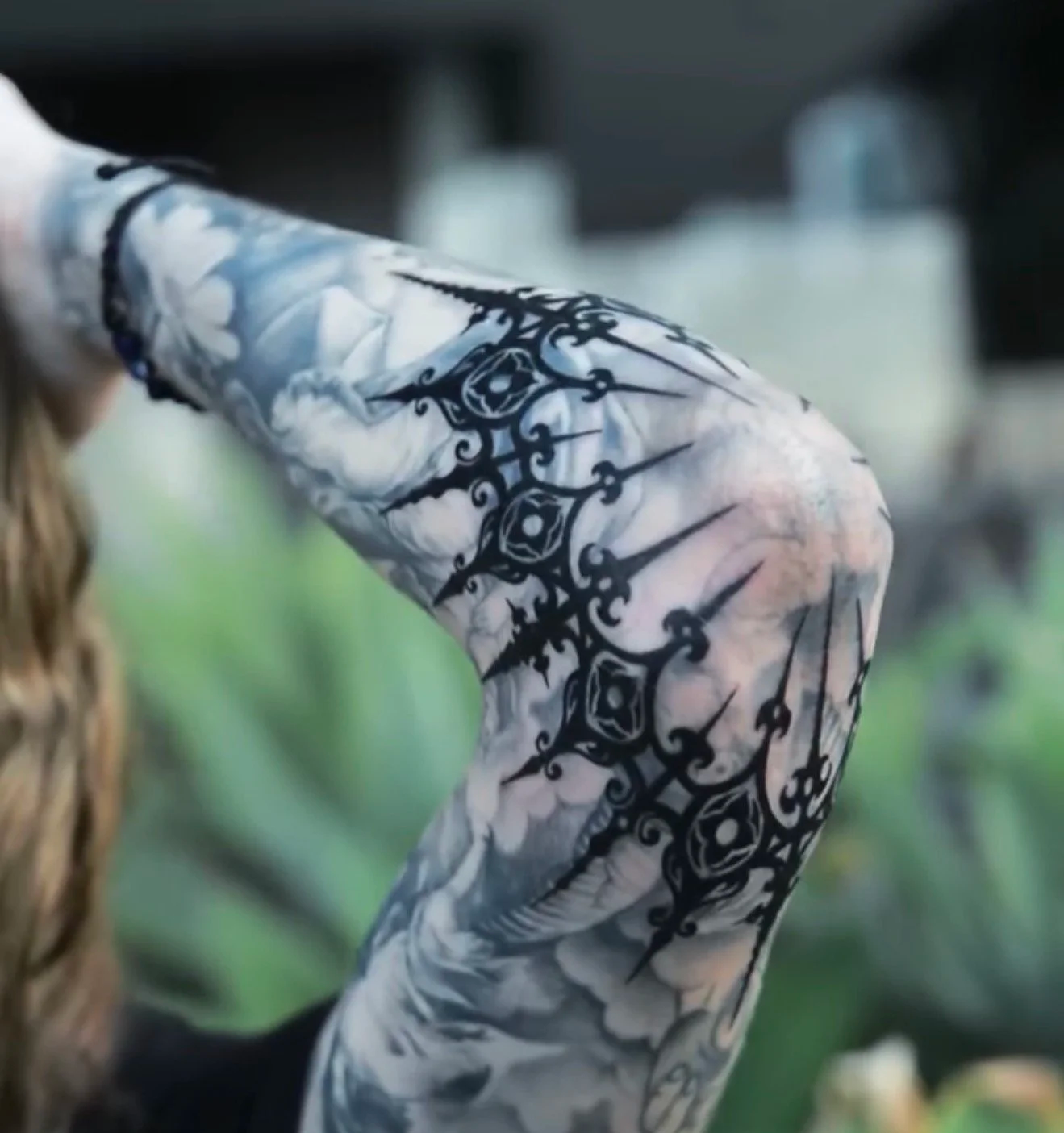
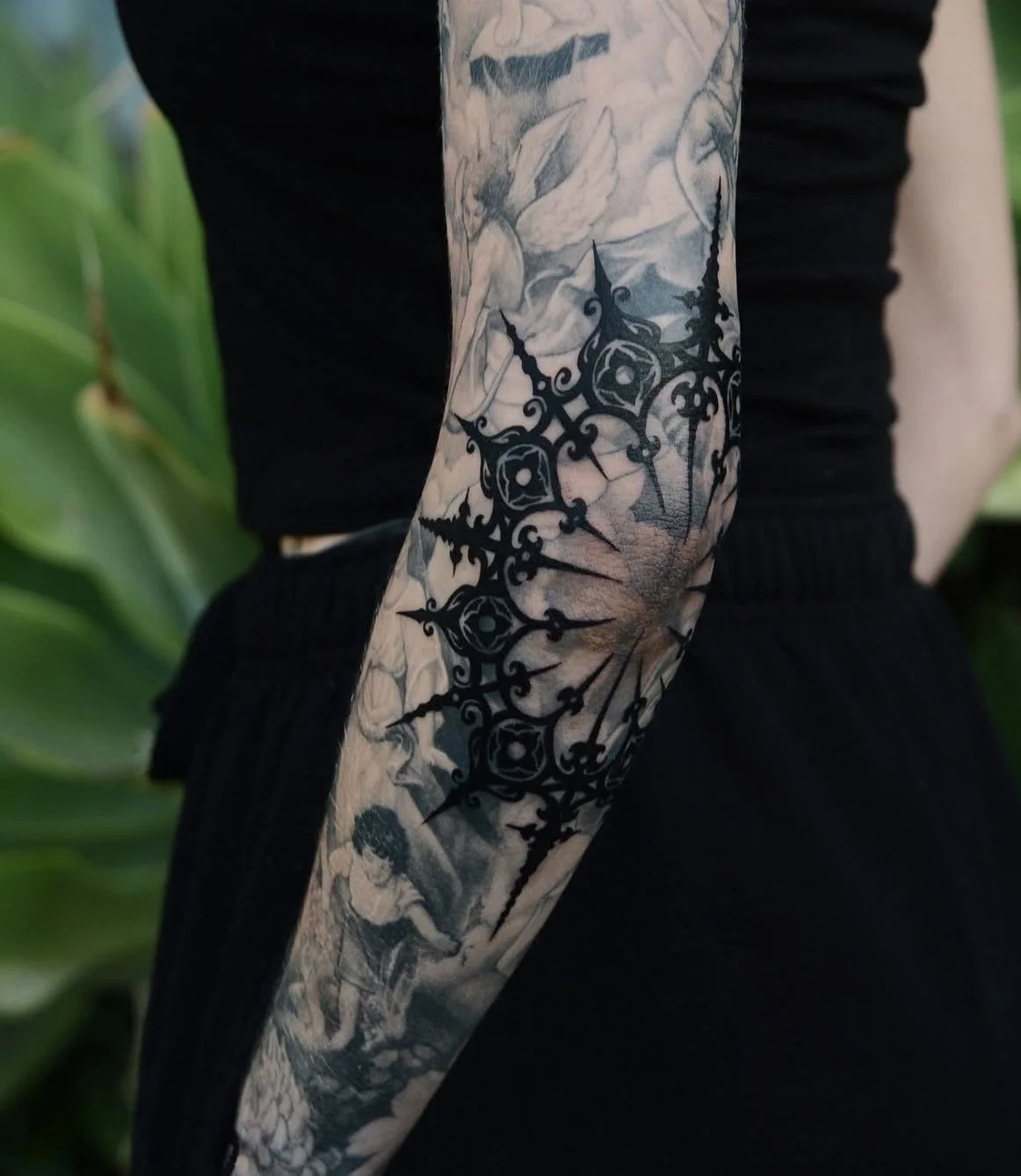
The strongest innovations in tattooing rarely emerge from nothing. Trends change, techniques evolve, and new tools appear, but the foundations remain. Tattooing has always been a conversation between generations — that dialogue is what keeps the art form alive.
Ink fades. Style dates. Tradition doesn't. Ask your artist what history they're pulling from before you ask what's cool — that's how you end up with a tattoo instead of a trend.
