
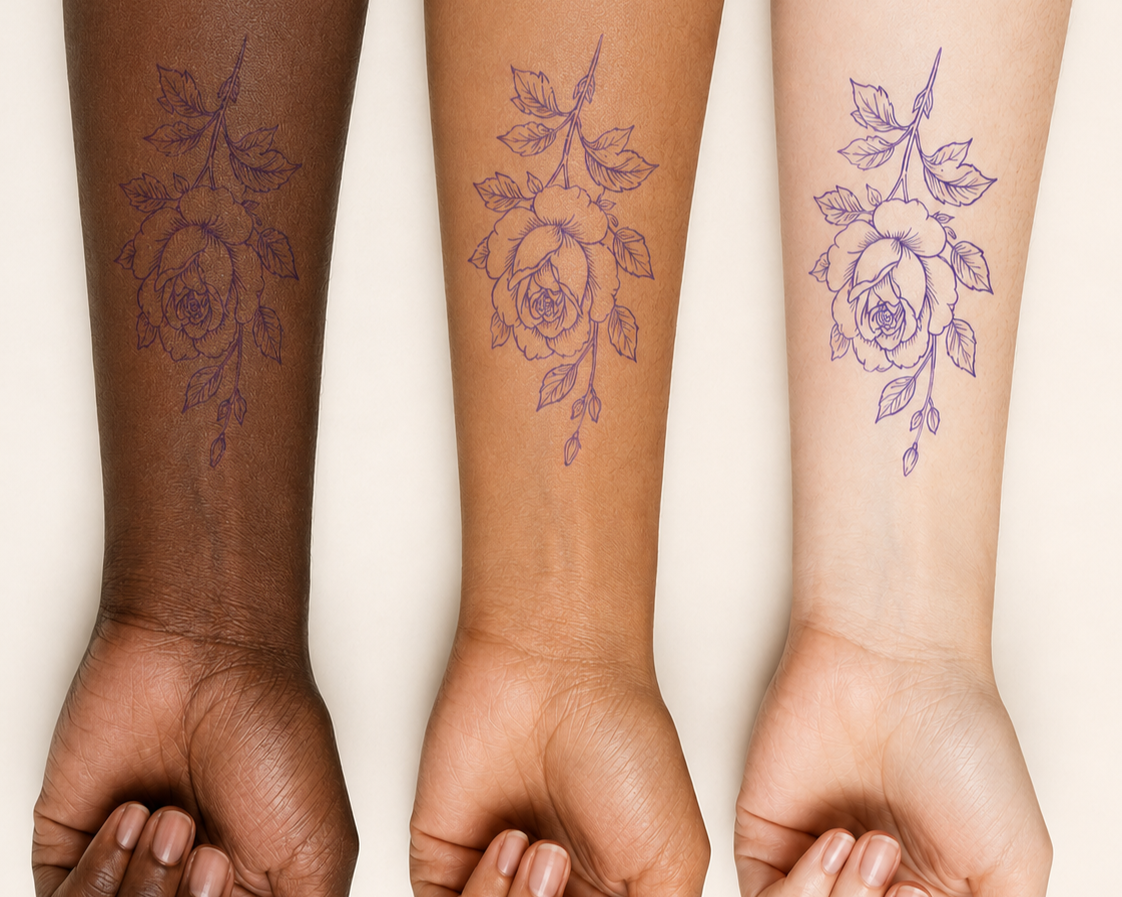
INSIDE THE INDUSTRY: STENCIL EVOLUTION
Before anyone printed a stencil, artists etched designs into acetate or celluloid, sometimes for hours. Then came hectographic pencils in the 1870s, and later carbon paper — faster, but still manual.
The real leap came in the 1970s, almost by accident. Tattooists raided office supply closets for 3M Thermo-Fax machines and found heat-transferred carbon made cleaner, more consistent stencils than hand-tracing. Lou Robbins gets credit for spotting it first. When 3M stopped making the machines, a paper manufacturer built a version for tattooing, and thermal transfer became standard almost overnight. Digital design finished the job: once artists drew on iPads, thermal printers gave a direct line from screen to skin.
Each shift took time and uncertainty out of the part before the needle touches skin, so the artist could spend more of the session on the part that matters. That's the lineage the newest tool is stepping into.