
a fresh start..
Regret happens — and so does the desire for a fresh start. Fortunately, tattoo removal has come a long way, offering several paths depending on your tattoo's size, color, and location. So, let’s talk options…
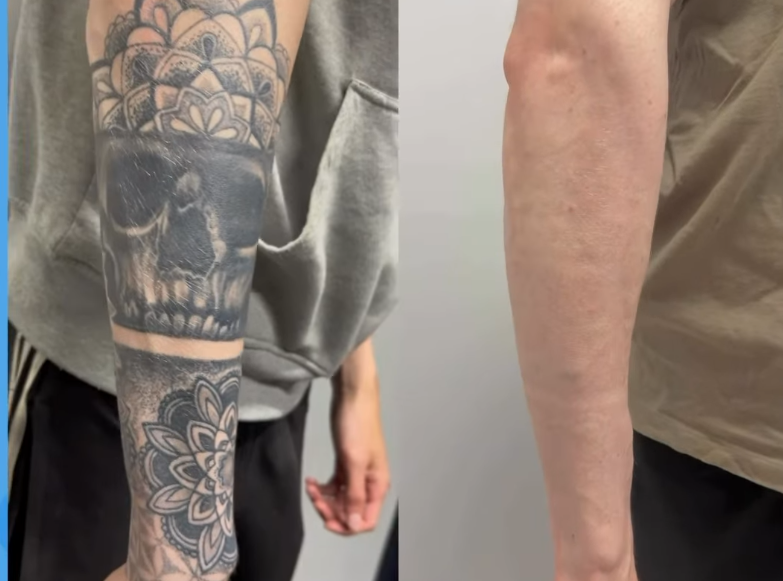
LASER TATTOO REMOVAL EXAMPLE (MULTIPLE SESSIONS)
Laser Removal
Still the gold standard for most body tattoos, laser removal uses focused light pulses to shatter ink particles into fragments small enough for your immune system to clear away naturally. It typically takes multiple sessions spaced weeks apart, and results depend on ink color and skin tone. It's highly effective for larger tattoos but can be uncomfortable and costly over a full treatment course.
Surgical Excision
For small tattoos, a dermatologist can simply cut out the tattooed skin and stitch the area closed. This offers immediate, complete removal in one step, but it leaves a scar and only works on tattoos small enough to close without excessive tension on the skin.
Dermabrasion
This method "sands" away layers of skin to reach and remove the ink-containing tissue. It's less common today, largely replaced by gentler alternatives, since it carries a higher risk of scarring and uneven skin texture.
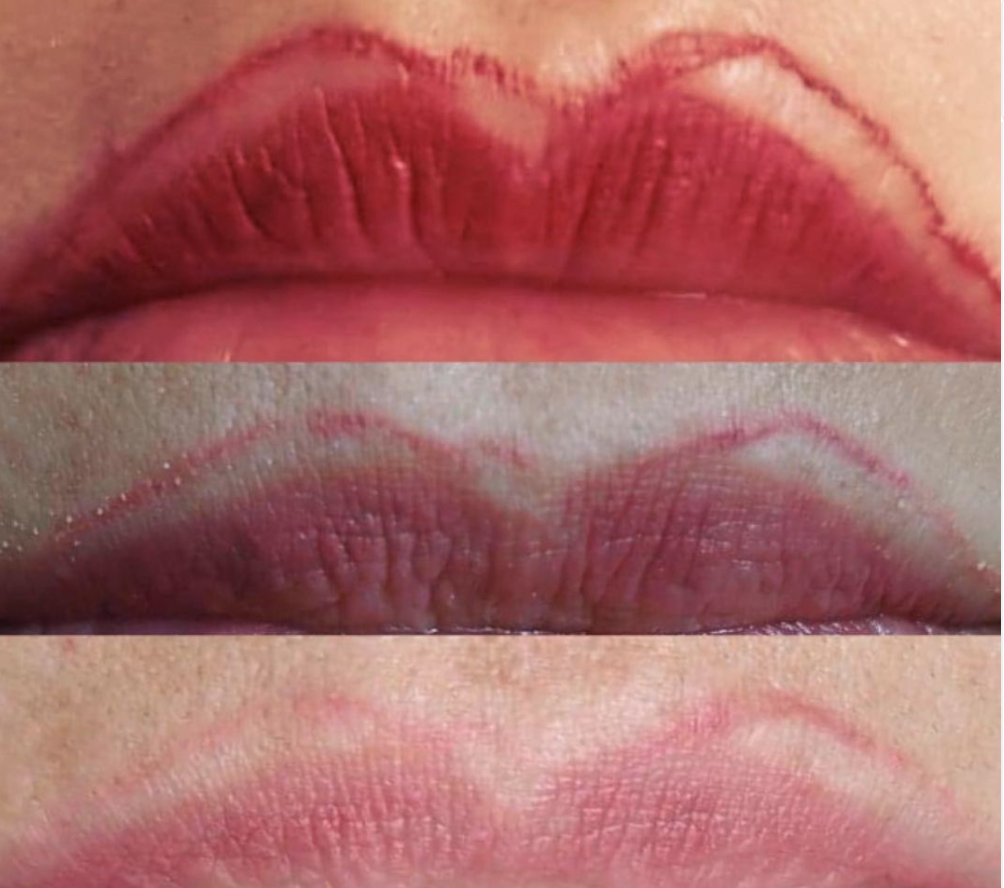
SALINE TATTOO REMOVAL EXAMPLE
Saline (Salt) Removal — The Newer Option
Saline removal is a non-laser technique that involves implanting a concentrated saline solution into the tattoo using a machine similar to a tattoo gun. The solution binds with the pigment, and as the skin heals and forms a light scab, the ink is drawn up and gradually shed away over several sessions.
It can lighten or fully remove tattoos, though it isn't the most efficient method for large designs. Because it relies on hand or machine implantation, it works best on smaller tattoos — roughly the size of a deck of cards — and is a popular choice for correcting cosmetic tattoos like microblading or eyeliner. It's especially valued for cosmetic pigments that don't respond predictably to laser and can even shift color instead of fading.
Choosing the Right Method
Your best option depends on tattoo size, ink type, skin sensitivity, and budget. A consultation with a licensed removal specialist or dermatologist is the safest way to map out a plan.
