
inside the industry.. last call for accountability
You’re a few drinks in, the night’s been epic thus far, and somehow you end up in a tattoo chair. Most drunk decisions vanish with the hangover, forgotten along with everything else about the night, but a tattoo doesn’t, it’s the one souvenir that never fades from memory loss, it’s just there. That’s why artists carry more accountability than almost anyone else in that moment, and it’s part of why you should tip your tattoo artist better than you tip your bartender. Most shops have you fill out a waiver first, confirming you’re not pregnant, that you’re not underage, and that you’re not visibly intoxicated, because in many states, tattooing someone in that condition puts the artist’s license on the line. The bartender who kept the drinks coming carries risk too, but in each of their respective industries, it’s the person standing closest to you, the artist or the bartender, who’s usually held personally accountable, not the venue, not the bouncer, not the supply chain behind them.

Alcohol servers have one thing tattoo artists don’t: tips. Just kidding, we know they both get tips, and given the hours a tattoo takes versus a drink, artists probably deserve the bigger one, though that depends on the artist, since they set their own standards. But not that kind of tips, the other TIPS, a certification running since 1979 that’s trained more than 5.5 million people worldwide, reached only after an actual bartending academy teaches the craft first. Tattooing has nothing like that pipeline. New York City is one of many places where the entire path to a tattoo license requires almost no proof of skill at all, just a 3 hour infection control course and a written exam, nothing about machine handling, needle depth, or technique. Only a handful of states require any hands-on apprenticeship at all, and even those rarely test the skill directly, they just require you to log time with a mentor. Nobody in the licensing process ever confirms an artist actually knows how to use the machine safely. In a liquor liability lawsuit, TIPS functions as a reasonable efforts, or safe harbor, defense, recognized by courts, liquor boards, and insurers alike, historically formidable because it gives a server documented proof of training. Distilleries, though, are actually regulated hard. Every batch gets gauged for proof before it ever leaves the plant, the label has to match reality within a razor thin tolerance, and the whole operation answers to both the FDA and the Treasury’s Alcohol and Tobacco Tax and Trade Bureau. Partly that’s about safety, but mostly it’s about tax, since proof determines the excise owed, giving the government its own financial reason to verify every bottle. Tattoo ink has no equivalent on either front. No certification for the artist, and no agency checking what’s actually inside the bottle before it reaches the shelf.

Alcohol and tattoo ink are both substances you’re putting directly into your body, one temporarily, one permanently, yet only one of them has anyone checking what’s actually inside before it reaches you. Start with that word, sterile. Most tattoo ink is sterilized with gamma radiation, not UV, since UV would degrade pigment before the bottle ever reached a shelf, the same process that fades a tattoo in the sun. But there’s no standardized, enforced dose for how much radiation actually achieves sterility. Companies apply an arbitrary figure and print “sterile” on the label, a practice at least one major manufacturer has publicly acknowledged, with no independent body confirming the dose was sufficient. A 2023 study found gamma sterilization can even release formaldehyde from glycerin, a common carrier, and alter the pigment’s nanoparticle structure in the process.
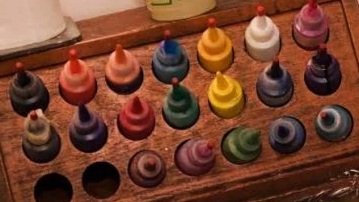
Your ink log doesn’t close that gap either. Most states require logging brand, lot number, and open and discard dates, but that only lets you match ink against a future recall, it can’t tell you how it was made or verified beforehand. Traceability runs backward only, after something’s already gone wrong. There’s a similar gap between who’s authorized to sell a brand and who’s authorized to manufacture it, two separate licenses, and companies publish distributor lists far more often than manufacturing partner lists.
The gap widens from there. The EU’s 2022 REACH restrictions banned thousands of chemicals from tattoo ink, forcing reformulation. The US had no federal ink law until MoCRA passed that same year, and it only requires facility registration, no premarket testing, no banned substance list. A 2024 FDA study found over 30 percent of tested inks contaminated with bacteria, a one-time study, not ongoing surveillance. The gap extends to needles too, unregulated as medical devices the way acupuncture needles are, leaving sharpness and gauge consistency market-driven, with cartridge plastics carrying no biocompatibility standard at all.
Go back to that same night. The bartender who over-serves and the artist who tattoos anyway are both liable, immediately, personally. The distillery and the ink manufacturer are liable for nothing. That’s not really a safety story, it’s a money story. Legalization brought tax revenue and legitimacy, not testing infrastructure, because regulating one worker at the point of contact is cheap, and regulating everything upstream of them is expensive.
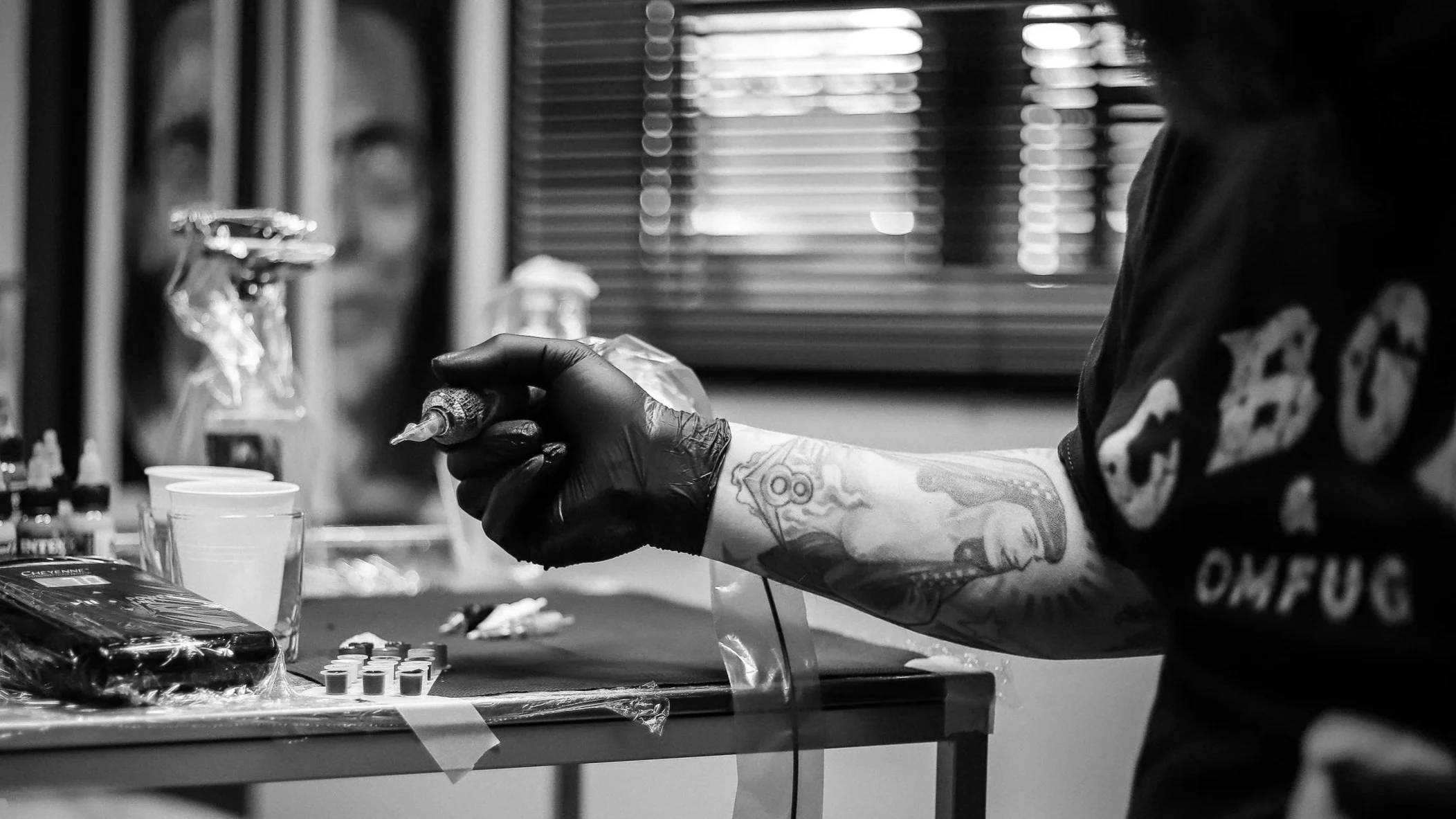
Alcohol eventually built TIPS to protect its frontline workers, and a testing system that verifies what’s actually in the bottle. Tattooing hasn’t done either. The industry could take real notes here, not just to shield artists from liability, but to protect clients from reactions that rarely get traced back to the ink itself, because most people assume any problem is the artist’s fault, not an unverified formula they were never told about. Hopefully companies begin to enforce their own high standards and testing, to secure the safety of clients and artists. Individual artists don’t have to wait for certification requirements that don’t yet exist, they can raise their own practices and education right now. And eventually, governing bodies could build standardized systems, simple enough for every company to adopt, so the whole industry can be monitored and its participants kept safe. Accountability isn’t just protection, it’s what lets an industry shed old stigma and grow into the legitimate, thriving craft it’s always had the potential to be. So ask about the ink, ask about the sterilization, ask about the training, whether you’re the one holding the machine or the one under it. Think before you ink.
