
Pete Davidson's INK RE-VISION
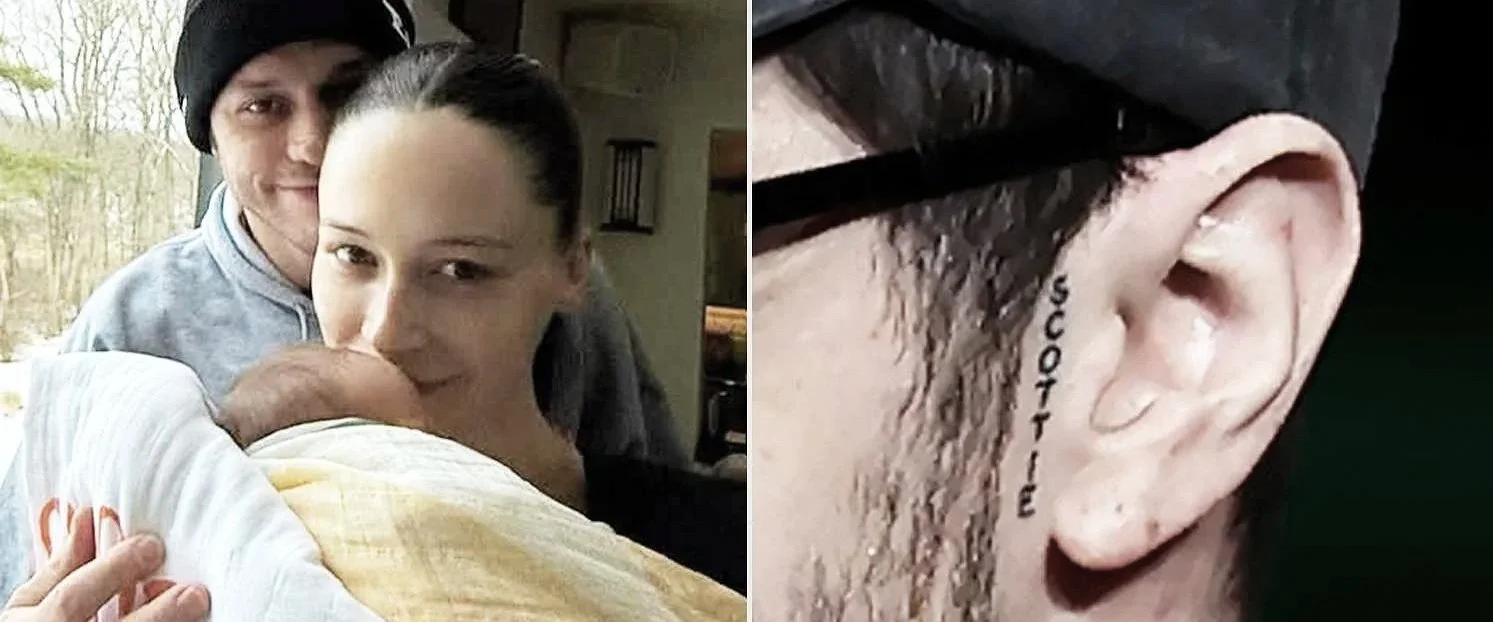
For years, Pete Davidson was known almost as much for his tattoos as for his comedy. His arms, chest, and torso were once a dense patchwork of ink — jokes, cartoons, and tributes to people who came and went from his life. So when he showed up nearly bare-armed, most fans assumed the ink chapter of his story was over. Then came the twist: a small, deliberate new tattoo of his daughter Scottie's name, written vertically near his ear. That contrast — years of erasure followed by one carefully chosen addition — is what makes his story worth unpacking.
Why He Started Removing Them
Davidson has been unusually direct about his reasoning, and it has nothing to do with disliking tattoos as an art form. He's said his old ink reminded him of a period of active addiction and unhappiness, explaining that he associated the pieces with feeling unwell and wanting to hide behind them. His stated goal was simple: strip away the visual record of who he used to be and "start fresh."
That distinction matters. This wasn't a rejection of tattoo culture — it was a rejection of one specific chapter of his own life that happened to be written on his skin.
What He Actually Removed
The tattoos targeted for removal reflect that same theme. Among them were a chest piece originally reading "jokes come and go, but swag is forever" (later covered by a shark before ultimately being lasered), a Mars Attacks alien skull, a Winnie the Pooh design, and several pieces tied to his relationship with Kim Kardashian, including cursive script referencing Aladdin and Jasmine.
Notably, Davidson hasn't erased everything. He's kept tattoos honoring his mother and his late father, a New York City firefighter who died on 9/11, along with a few Sopranos-inspired pieces and one he's joked he'll never part with simply because of how absurd it is. The pattern is clear: pieces tied to old relationships, old humor, and an old identity went; pieces tied to family stayed.
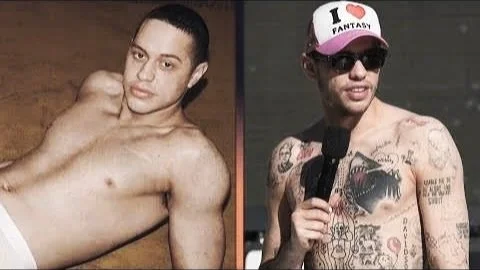
That's why "clean slate" doesn't quite capture what happened here. It reads less like an erasure and more like a curated edit — a conscious sorting of which parts of the past still belong on his body, and which don't.
The Process Wasn't Easy — Or Cheap
Davidson began removing his tattoos back in 2020 and, six years later, is still not finished. He's estimated the process has cost him roughly $200,000, and by his own account, only around 30 percent of his ink had actually been cleared as of this year.
He hasn't sugarcoated the experience, either. He's described laser removal as "pretty horrible" — worse, in his words, than getting the original tattoos — comparing it to putting his arm on a grill and burning off a layer of skin, followed by six to eight weeks of healing time before the next round, repeated roughly a dozen times per tattoo.
That account is worth taking seriously. One doctor involved in his removal process has publicly downplayed the pain, suggesting it shouldn't hurt much at all. But that claim doesn't hold up well against broader patient data: research on laser tattoo removal has found that a majority of patients rate the pain as moderate to extreme, and clinics themselves place four to six on a ten-point scale as the typical experience — climbing higher for sensitive areas or denser tattoos. Davidson's account tracks much closer to what most people actually report than the reassurance offered on his behalf.
Removal Isn't the Only Way to Edit Your Story
Davidson's path was full removal, but it's worth remembering that's just one option for people who've outgrown a piece of ink. As we explored in our own piece on tattoo acceptance and life's transitions, removal isn't the only way to reckon with old art — blast-over tattoos have emerged as a popular alternative, where instead of erasing a piece, an artist builds a bold new design directly over or through it, letting the old work become the foundation for something new rather than disappearing entirely. It's a different philosophy: not out with the old, but the old becomes part of the new. Where Davidson chose a blank canvas, plenty of others are choosing to build forward instead.
Both approaches land in the same place, though — the recognition that ink, like identity, isn't always permanent in meaning, even when it's permanent on skin. As we've said before, loving your ink starts with loving yourself, and sometimes that self changes.
